
"She's too small to sleep alone."
"In our family, the baby sleeps with mom."
"Just give her a bottle, she'll sleep."
"Why are you making this so complicated?"
If you grew up in an Indian or South Asian family, there's a good chance you've heard some version of these. Maybe from your mom. Maybe from your mother-in-law. Maybe from an auntie at a family gathering who had a lot of opinions about your baby's bedtime.
I've heard every single one.
Almost nine years ago, as a brand new mom after IVF, I decided to help my daughter learn to sleep independently. And while I'm so grateful for the love and support of my family, I'll be honest. Not everyone understood. (You can read our family's sleep story here.)
If you're navigating this right now, this is for you.
How Sleep Looks in Many Indian and South Asian Homes
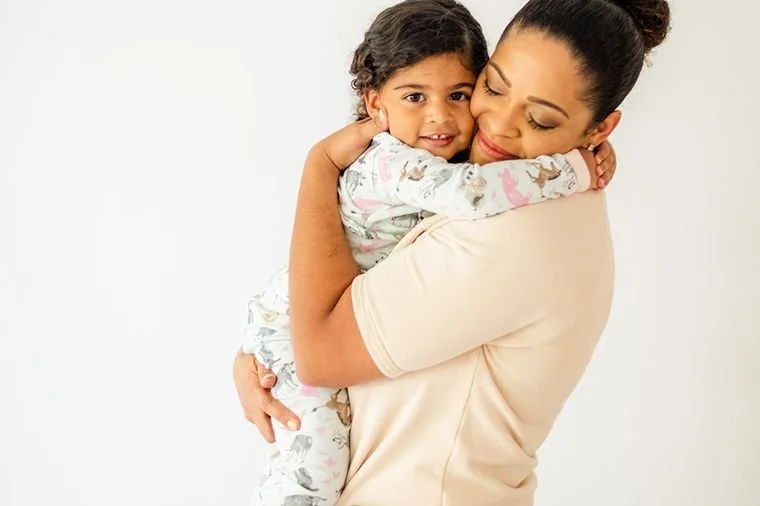
In many South Asian cultures, babies are rarely alone. They sleep next to mom or grandma. They're rocked, fed and carried to sleep. Extended family helps with nights. Bedtimes are often later, because family dinners and gatherings happen late.
Research reflects this too. In a large study of nearly 30,000 babies and toddlers across Asia and predominantly Western countries, including India, pediatric sleep researcher Dr. Jodi Mindell and her colleagues found that children in predominantly Asian countries tended to have later bedtimes, got less total sleep and were much more likely to share a room with their parents (Mindell et al., Sleep Medicine, 2010).
There is so much beauty in this. The closeness. The constant presence of people who love the baby. The sense that no one has to do it alone.
But life for the millennials often looks different. Many of us live far from extended family, or have family nearby who aren't there when we need support the most at 2 AM. Many moms work outside the home. Many of us are doing it with just our partner, or alone.
And what worked in a full house with three generations doesn't always work in a two-parent home where both people need to function the next day.
Is It Wrong to Want Your Baby to Sleep Independently?
No.
Choosing to help your baby sleep in their own space does not mean you love them less. It does not mean you're rejecting your culture. And it does not mean you're choosing a "Western" way over your family's way.
It means you're making a choice for your family's health and rest.
There's also a myth worth gently correcting: that helping a baby sleep independently means leaving them to cry alone. It doesn't have to. Gentle, responsive approaches let you stay close, comfort your baby and still help them learn to fall asleep on their own. Here's how to gently help your baby sleep without cry-it-out.
How to Honor Tradition and Still Get Rest
Keep the Traditions That Matter to You
You don't have to throw anything away. In our home, we kept:
Lullabies in Gujarati
Bedtime prayers and singing aarti
A warm oil massage before bath
Lots and lots of cuddles before bed
Your bedtime routine can be full of your culture. That routine is part of what helps your baby feel safe enough to sleep. In fact, Dr. Mindell's research found that a consistent nightly bedtime routine helped babies and toddlers fall asleep faster and wake less often, and it improved moms' mood too (Mindell et al., Sleep, 2009).
Follow Safe Sleep Guidelines
The American Academy of Pediatrics recommends room-sharing (baby in their own crib or bassinet in your room) for at least the first six months, and recommends against bed-sharing because of the risk of sleep-related infant deaths (AAP, Pediatrics, 2022). You can keep your baby close without sharing a bed. The Sleep Foundation's guide to co-sleeping explains the difference, and here's my post on when to stop room sharing with your baby.
Make Bedtime Fit Your Family's Rhythm
If your family eats late, an earlier bedtime can feel hard. Try feeding your baby earlier, letting them enjoy family time, and then starting the routine while the adults finish dinner. Babies and toddlers generally do best with bedtimes between about 6:30 and 8:00 PM.
Invite Family In
Give grandparents a meaningful role. Let grandmom do the oil massage. Let grandfather sing the bedtime song. When family feels included, they're far more likely to support your choices. (More ideas in my guide to baby sleep at the grandparents' house.)
How to Talk to Family About Your Choices
These conversations can feel loaded. Here are a few phrases that keep things kind and clear.
"I know you did it differently, and it worked for you. This is what's working for us right now."
"I'm not doing this to keep her away from you. I'm doing it so she's rested and happy when she's with you."
"Our pediatrician recommended this, so we're going to stick with it."
"Would you like to sing her the bedtime song tonight?"
And remember: you don't have to convince everyone. You just have to do what's right for your family, with love.
Your South Asian Family Sleep FAQs
Is co-sleeping common in Indian culture?
Yes. In many Indian and South Asian families, babies traditionally sleep in the same bed as their mother or grandmother. The AAP recommends room-sharing without bed-sharing for safety, so many families keep baby close in a bassinet or crib in the parents' room.
How do I convince my parents or in-laws to support my baby's sleep plan?
Share the "why," include them in the routine, and focus on how good sleep helps your baby be happier during their time together. Some family members come around once they see how well-rested the baby is.
Can I help my baby sleep independently without letting them cry it out?
Yes. Gentle, responsive methods let you comfort your baby and stay close while they learn to fall asleep on their own. Here's more on sleep training without cry-it-out.
Will sleeping in their own space make my baby less attached?
No. Attachment is built through consistent, loving, responsive care, all day long. Where your baby sleeps doesn't change the bond you're building.
Is a later bedtime okay if our family eats dinner late?
Once in a while, absolutely. On most nights, though, babies and toddlers tend to sleep longer with an earlier bedtime. You can still include them in family time before the routine starts.
You Can Have Both
To every desi mama caught between your family's way and what your family needs right now: you are not choosing between love and rest.
You can rock your baby, sing your mother's lullabies, keep every tradition that matters to you, and still help your baby sleep.
That's not choosing one culture over another. That's raising your children with the best of both.
Honoring Tradition and Getting Rest: Quick Recap
In many South Asian homes, babies sleep close to family, bedtimes run later and extended family helps at night.
Wanting your baby to sleep independently doesn't mean rejecting your culture or loving your baby less.
Keep the traditions you love, like lullabies, prayers and oil massage, inside a consistent bedtime routine.
Follow safe sleep: room-share without bed-sharing for at least the first six months.
Aim for a bedtime between about 6:30 and 8:00 PM, and invite grandparents into the routine.
Gentle, responsive approaches let you stay close without cry-it-out.
Research and Resources
Keep Reading
Grab Your Free Newborn Sleep Guide
Wake windows, sample routines, sleepy cues, and the 6 sleep foundations I use with every family.
Get the free Newborn Sleep Guide here
Want a Plan Made Just for Your Family?
If you're tired of guessing, my 1:1 VIP Sleep Coaching gives you a personalized, gentle sleep plan and daily support from me until your nights feel calm again. No cry-it-out.
Book your VIP Sleep Coaching here
Unnati Patel is a certified pediatric sleep consultant, published epidemiologist (MPH), and founder of Nested to Rested Sleep. She has helped thousands of families worldwide achieve better sleep using a gentle, evidence-based, family-centered approach, no cry-it-out required. She lives in Atlanta, GA with her husband (a child psychiatrist) and their two children.